The Confident Author's Handbook
Get the Free Handbook That Answers the Four Legal Questions Every Nonfiction Author Has to Ask Before They Publish

A Working Author's Guide to Copyright, Sourcing, and Writing the Truth With Clarity and Confidence, Complete With Five Video Walkthroughs, Yours Free
If you're thinking about writing a book, there is a lot to consider: your story, your structure, your audience, the platform you'll need to sell it. One of the biggest things, and the one most authors put off the longest, is the legal information you need to write with confidence, so that a single quote, a real name, or a borrowed statistic never turns into a copyright or libel problem after your book is already in readers' hands.
What if you could quote a real conversation, open every chapter with the perfect line, and name the people in your own story, all without stopping mid-draft to wonder whether a lawyer is about to call?
What if a single handbook, paired with five short video walkthroughs, gave you a fast and confident answer to the four questions that quietly stall nonfiction authors: what you own, what you may borrow, who you may write about, and how to legally open a chapter with someone else's words?
What if you could get all of it today, free, and go back to writing the book only you can write? Or better understand what your support team knows or needs to know as they help you write your book.
That is what A Confident Author's Handbook: Borrowed Words, Real People, and the Lines You Can't Cross will do for you. It is built for memoirists, business book authors, and every nonfiction writer who wants to tell the truth on the page without second-guessing every quote, statistic, and real name in their manuscript.
This Is a Complimentary Course!
But You Might Be Wondering, How Is This Different From A Generic Copyright Blog Post Or Asking AI?

Let me tell you.
You've probably already tried to find these answers on your own, without much luck:
- A copyright blog post written for musicians or bloggers that never mentions what to do when you want to name a real former business partner in chapter six.
- A five-minute answer from a friend who happens to be a lawyer, that covers the general rule but not the actual chapter sitting in front of you.
- A publisher's boilerplate clause that tells you you're liable for infringement, without ever explaining what infringement actually looks like inside a memoir.
- A generic "fair use" explainer that treats fair use like a checklist instead of the judgment call it actually is.
The truth is, this handbook is different because it was built specifically for the decisions nonfiction authors actually face: the epigraph you want to open chapter one with, the real coworker you need to describe honestly, the statistic you found on a blog instead of at the source. Instead of vague legal theory, you get four clear questions, real examples, and five video walkthroughs that show you how to run each decision in seconds instead of stalling for a week.
All it will cost is around 30 minutes of your time and is 100% Free—It includes five short video walk throughs of the handbook information.
No Credit Card Required.
Get the Legal Clarity You Need So You Know Whether or Not You Need to Hire a Lawyer
Who is this offer for?
- Memoirists, business book authors, and nonfiction writers who are actively drafting or about to draft a manuscript.
- Authors who want to quote real conversations, open chapters with someone else's words, or name real people in their story.
- Writers who have felt stuck mid-draft, unsure whether a quote, a statistic, or a real name is safe to use.
- Anyone who wants practical fluency, not a law degree, on the copyright and defamation questions that actually come up in nonfiction writing.
Who this offer isn't for...
- Anyone facing an active legal dispute or a cease-and-desist letter right now; this handbook is education, not legal advice, and that situation calls for a real attorney.
- Authors who want someone else to make every borrowing decision for them instead of learning the four questions themselves.
- • Anyone looking for legal advice specific to their own manuscript rather than general working knowledge every nonfiction author can use.
What If There's More To Why You Keep Stalling Over A Single Quote Or Real Name?
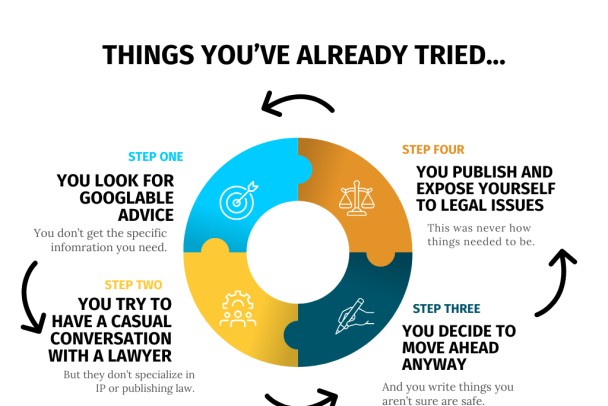
What You've Already Tried
- A generic copyright blog post that explains fair use for song remixes and blog screenshots but never mentions memoir, epigraphs, or real people.
- A quick answer from a friend who happens to be a lawyer, that told you the general rule but not what to actually do with the paragraph in front of you.
- A publisher's boilerplate warning that you're liable for infringement, with no explanation of what that means for the specific line you're worried about.
What if the real problem was never your instincts about your own story, but that none of those sources were ever built around the four decisions nonfiction authors actually have to make? That's exactly the gap this handbook was built to close.
I Know How To Help Because I've Spent Years
Making These Exact Calls With Real Authors
My name is Kristin Spencer, and I'm the founder of Literary Symmetry. I've spent years as a trained copyeditor and ghostwriter, working alongside memoirists and business book authors as they made exactly these decisions: which line to quote, which real person to name, which statistic needed a better source before it went to print.
Early in my career, I watched authors stall out mid-manuscript over questions that had simple, fast answers once they knew where to look: is this fair use, or do I need permission? Can I open this chapter with a line from a song? Can I describe what my old business partner actually said?

I built this handbook, and the five videos that walk through it, so that every author I work with, and every author who finds this on their own, can make those calls in seconds instead of losing a week of momentum to a worry they could resolve in five minutes.
This is the same handbook my own team uses to flag passages worth a second look when we're ghostwriting or coaching a manuscript. Now it's yours, free, whether or not we ever work together.
Across The Handbook And Five Video Walkthroughs, You'll Get Clear, Confident Answers To...
- What you actually own the moment you write something down, and what changes when a ghostwriter or publisher is involved.
- What you may borrow without asking, including the real difference between fair use and the two lookalikes that fool most authors.
- Who you may write about, and the three questions to ask before you name a real person in your story.
- How to legally use a quote to open your chapter, including five ways to do it without asking anyone for permission at all.
And you'll walk through five short videos with me, so you're never left interpreting a written guide alone.

Here's Everything You Get When You Sign Up For A Confident Author's Handbook Today
A Confident Author's Handbook
The full written guide covering all four questions: what you own, what you may borrow, who you may write about, and how to legally use a quote to open a chapter, complete with real examples and a short set of moves to run against your own manuscript at the end of every part.
Video 1: What Do I Own?
A walkthrough of ownership and permission, including what changes the moment a ghostwriter or publisher is involved, so you know exactly who holds the copyright to your book.
Video 2: What May I Borrow?
A walkthrough of fair use as a judgment call rather than a checklist, including the highest-risk borrow of all (song lyrics and poems) and the safest source of all (the public domain).
Video 2.5, The Detour: Every Claim
Is Borrowed Credibility
A short detour into sourcing facts, statistics, and claims, including the trust ladder of sources and a workflow for checking a claim without losing your whole afternoon to it.
Video 3: Who May I Write About?
The finalized, locked-in version of your statement, plus a one-line audit naming exactly where it's still missing from your own website, bio, or proposals today—your concrete next action, not just a nice sentence.
Video 4: How Do I Legally Use Quotes to Open My Chapters?
A walkthrough of the epigraph, including five ways to open a chapter without asking anyone for permission at all, and how to clear the one quote you don't want to replace.
Investing in a course similar to this would cost you around: $99
But If You Sign Up Today, You'll Get A Confident Author's Handbook Plus Video Walk Throughs for Free.
Are You Ready To Finally Know What You Can and Can't Write?
100% Free—Five Short Video Lessons Plus the. No Credit Card Required.
Here's My Promise To You

Because this is a free, instant-access digital handbook and video series, there is no purchase to refund and nothing to lose by signing up. You'll get instant access the moment you sign up, no credit card required, and you can unsubscribe at any time if it isn't useful to you.
My only promise is that both the handbook and every video will treat you like the capable author you already are.
Let's Go Through Some of the Things You Might Still Be Wondering
Frequently Asked Questions [FAQs]
"Is this legal advice?"
No. This handbook is general education for working authors, not legal advice, and nothing in it creates an attorney-client relationship. If you're facing an active dispute, or writing about especially high-stakes material like a memoir of disputed events or a book sold heavily abroad, please retain an attorney who practices publishing or intellectual-property law where you live. What this handbook will do is give you the working fluency to make the everyday calls confidently, and to know exactly when a situation is serious enough to call in a real attorney.
"Why is this free?"
Because every author on my team already gets this exact fluency as part of working with us, and I'd rather put it directly in your hands than watch you stall over a quote you could clear in five minutes. If it helps you finish your book, I've done my job.
"I'm not writing a memoir. Does this still apply to me?"
Yes. The four questions in this handbook apply to any nonfiction book that quotes real words, cites real data, or names real people.
"What if I already have a ghostwriter or editor?"
This handbook works alongside them, not instead of them. If you're working with Literary Symmetry, your team will already flag the passages worth a second look. This handbook simply makes that conversation faster, because you'll already understand why they flagged it.
Here's Everything You Get When You Sign Up For A Confident Author's Handbook Today
A Confident Author's Handbook
The full written guide covering all four questions: what you own, what you may borrow, who you may write about, and how to legally use a quote to open a chapter, complete with real examples and a short set of moves to run against your own manuscript at the end of every part.
Video 1: What Do I Own?
A walkthrough of ownership and permission, including what changes the moment a ghostwriter or publisher is involved, so you know exactly who holds the copyright to your book.
Video 2: What May I Borrow?
A walkthrough of fair use as a judgment call rather than a checklist, including the highest-risk borrow of all (song lyrics and poems) and the safest source of all (the public domain).
Video 2.5, The Detour: Every Claim Is Borrowed Credibility
A short detour into sourcing facts, statistics, and claims, including the trust ladder of sources and a workflow for checking a claim without losing your whole afternoon to it.
Video 3: Who May I Write About?
A walkthrough of writing real people fairly, including the three questions to ask before you name anyone and how to handle the hardest cases in your own story.
Video 4: How Do I Legally Use Quotes to Open My Chapters?
A walkthrough of the epigraph, including five ways to open a chapter without asking anyone for permission at all, and how to clear the one quote you don't want to replace.

Remember, there's no purchase to refund and nothing to lose, since this is a free, instant-access handbook and video series.
Are You Ready To Write Your True Story With Total Confidence?
